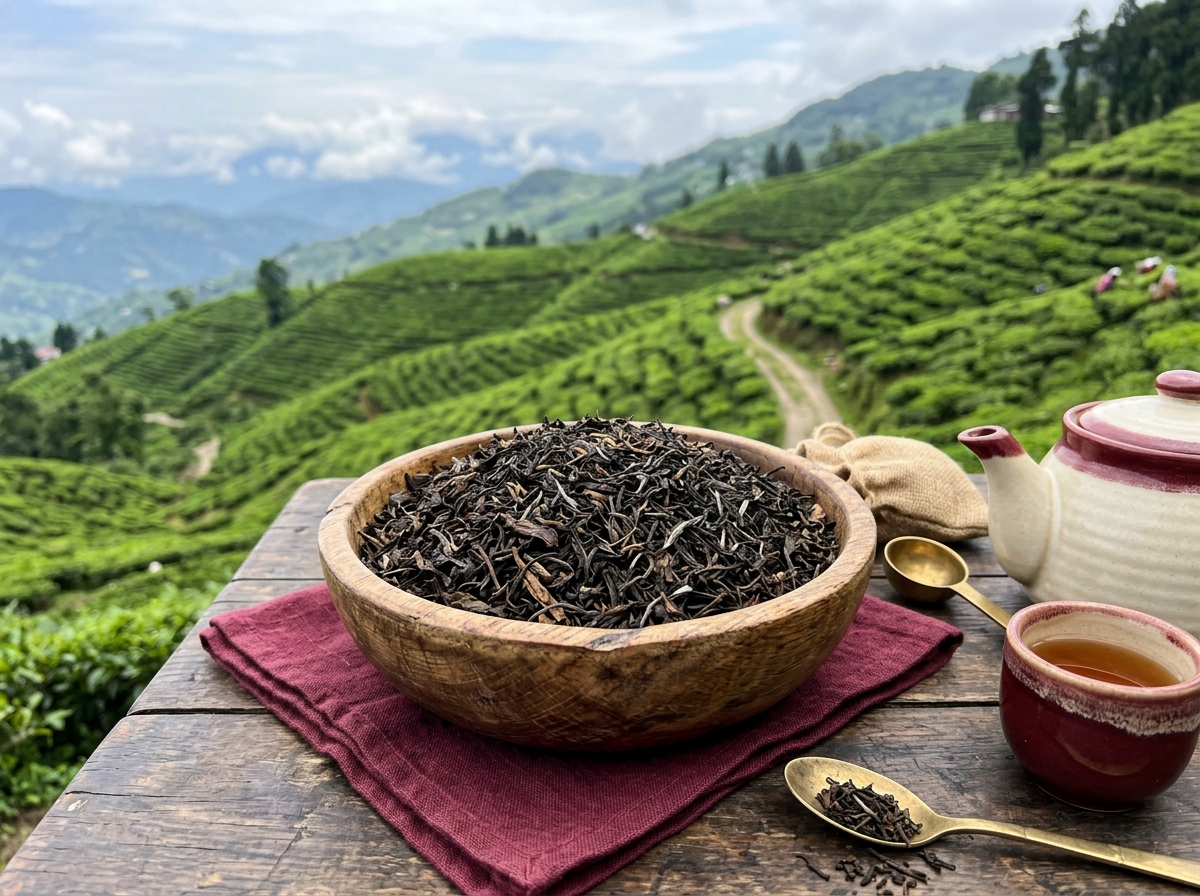
Nestled in the foothills of the Himalayas in West Bengal, Darjeeling produces a tea so distinctive, so prized by connoisseurs, that it's earned the nickname "Champagne of Teas". Unlike the strong, robust Assam tea that forms the base of everyday masala cha, Darjeeling tea is delicate, floral, and unmistakably different, a tea meant to be sipped slowly and appreciated on its own.
Why Altitude Changes Everything
Darjeeling's tea gardens sit at elevations between 600 and 2,000 metres, where cool temperatures, thin mountain air, and misty mornings slow the tea plant's growth dramatically. This slow growth is exactly what concentrates the delicate flavour compounds that make Darjeeling tea so distinctive. It's a completely different growing environment from the hot, humid lowlands of Assam, and the difference shows up unmistakably in the cup.
The Muscatel Flavour
Fine Darjeeling teas are often described as having a "muscatel" note, a subtle, wine-like sweetness reminiscent of muscat grapes. This unique flavour is believed to develop partly due to a tiny insect called the tea leafhopper, which nibbles on the leaves and triggers a natural chemical reaction in the plant, one that, curiously, actually improves the tea's flavour rather than damaging it.
Understanding "Flushes"
- First flush (March-April): light, delicate, and highly prized, picked right after winter dormancy
- Second flush (May-June): fuller-bodied with the classic muscatel note, considered by many to be the best
- Monsoon flush (July-September): stronger and less refined, often used in blends
- Autumn flush (October-November): mellow and smooth, a favourite for evening tea
Unlike Assam tea, which is harvested more or less continuously, Darjeeling tea is picked in distinct seasonal "flushes", and each one produces a noticeably different cup. Serious tea drinkers often seek out a specific flush by name, the way wine lovers look for a particular vintage.
Darjeeling tea isn't meant to be rushed with milk and sugar, it's meant to be tasted, one sip at a time.
How To Brew It Properly
Darjeeling tea is almost always enjoyed without milk, to let its delicate flavour come through undisguised. Use water just off the boil (not a rolling boil), steep whole leaves for 3-4 minutes, and resist the urge to over-steep, which can quickly turn the delicate flavour bitter. A small amount of honey is sometimes added, but sugar and milk are generally avoided by purists.
Darjeeling vs Assam: A Quick Comparison
Assam tea is grown in hot, humid lowlands and processed for strength, making it perfect for masala cha with milk and spices. Darjeeling is grown at altitude in a cooler climate and processed for delicacy, best enjoyed on its own. Neither is "better", they're simply built for entirely different moments, one for a bold morning cup, the other for a quiet, contemplative one.
Why It Carries A Geographical Indication Tag
Darjeeling tea was the first Indian product to receive a Geographical Indication (GI) tag, a legal protection similar to what Champagne or Parmesan cheese enjoys in Europe. This means that only tea grown in the officially defined Darjeeling region, across a specific set of estates in the hills of West Bengal, can legally be sold under the Darjeeling name. The protection exists precisely because the tea's unique flavour is so closely tied to its exact growing conditions that it can't be genuinely replicated anywhere else, and imitators selling "Darjeeling-style" tea grown elsewhere undermine both the region's reputation and its livelihood.
Why It Costs More Than Other Teas
Darjeeling tea gardens are smaller, harder to mechanise on steep hillsides, and yield far less per plant than the flatland gardens of Assam. Add in the labour-intensive hand-plucking required (only the top two leaves and a bud are picked for quality teas) and the seasonal nature of the best flushes, and it's easy to see why fine Darjeeling tea commands prices that can be many times higher than everyday CTC tea.
Frequently Asked Questions
Should Darjeeling tea be had with milk?
Most tea experts recommend against it. Milk tends to mask the delicate muscatel and floral notes that make Darjeeling tea special, so it's traditionally enjoyed plain, with at most a touch of honey.
What is the best flush to try first?
Second flush Darjeeling, picked between May and June, is often recommended for first-time tasters since it has the fullest body and the most pronounced muscatel character.
Is Darjeeling tea the same as Darjeeling-style tea?
No. Only tea grown within the legally defined Darjeeling region can carry the name under its Geographical Indication protection, so "Darjeeling-style" tea grown elsewhere is a different, unprotected product.