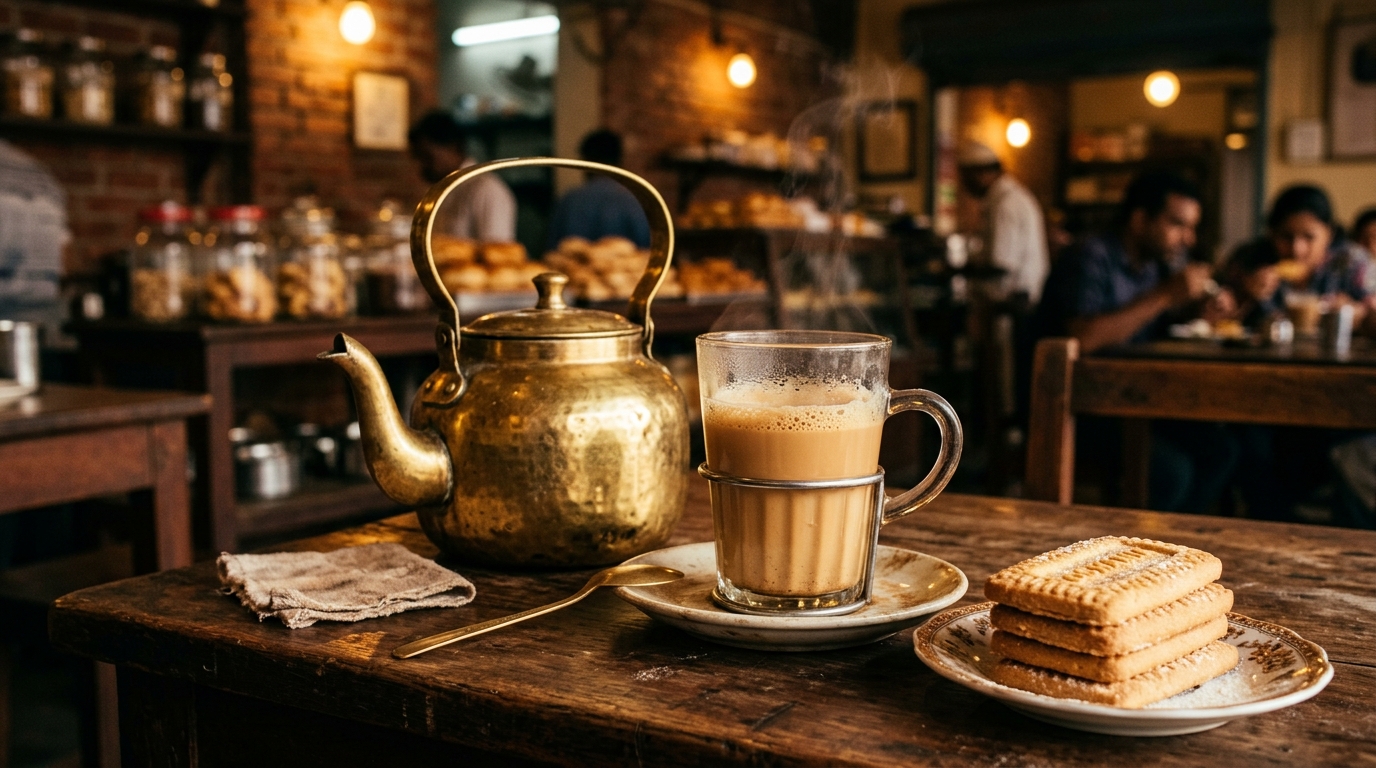
Walk into any old Irani café in Hyderabad and you'll notice the same things: marble-top tables, slow ceiling fans, waiters in white uniforms, and a glass of rich, creamy Irani cha arriving at your table almost before you've finished ordering. Irani cha and its constant companion, the Osmania biscuit, are as much a part of Hyderabad's identity as its biryani.
Where Irani Cha Comes From
Irani cha traces its roots to Persian (Iranian) immigrants who arrived in Hyderabad and Mumbai over a century ago and set up cafés that blended Persian hospitality with local flavours. These cafés became beloved neighbourhood institutions, and their signature tea, brewed strong in large kettles kept simmering through the day and finished with cream or condensed milk, became known simply as "Irani chai".
What Makes It Different
Where masala cha leans on a mix of spices, Irani cha keeps things simple: strong black tea, a generous amount of malai (cream) or condensed milk, and a touch of sugar. The result is a smoother, richer, almost dessert-like cup with far less spice but far more body. The tea is often kept brewing in large kettles for hours, so it only gets stronger as the day goes on.
The Osmania Biscuit Story
The Osmania biscuit is named after Osmania University in Hyderabad, and legend has it that it was created for the university's founder, who wanted a biscuit that was neither too sweet nor too salty. The result is a delicate, slightly sweet, slightly salty shortbread-style biscuit that's crumbly enough to dip into hot tea without falling apart too quickly, a perfect textural match for Irani cha.
- Osmania biscuit — sweet and salty shortbread, the classic pairing
- Bun maska — a soft bread roll loaded with butter
- Khari biscuit — flaky, savoury, and less sweet
- Dip the biscuit briefly in the hot tea for the full experience
An Irani café was never just about the tea, it was a place to sit, talk, and let time slow down for a while.
Where To Find The Real Thing
Hyderabad remains home to the last great Irani cafés in India, many of them over 50 years old and still run by the same families that started them. Mumbai holds onto a handful of its own historic Irani cafés as well, though their numbers have dwindled significantly over the decades as the city has modernised.
The Marble-Top Table Experience
Part of what makes an Irani café special has very little to do with the menu at all. The marble-top tables, kept cool even in Hyderabad's heat, the slow-turning ceiling fans, the black-and-white photographs on the walls, and the unhurried pace of service all add up to an experience that's as much about atmosphere as it is about food. Regulars often sit for an hour or more over a single glass of tea, reading the newspaper or simply watching the street outside, something that's becoming rarer in a city full of fast-paced coffee chains.
How To Make A Simple Version At Home
While a large kettle simmering all day isn't practical in most homes, you can get close to the flavour with a simplified method. Brew strong black tea (a CTC blend works well) for a few minutes longer than you normally would, so it turns properly dark and robust. Warm a generous splash of full-cream milk or a spoon of condensed milk separately, then pour the strong tea over it rather than boiling them together. Stir in sugar to taste. The result won't have the depth of a kettle that's been brewing since morning, but it captures the same rich, smooth character.
Irani Cafés Today: A Fading Tradition
Many of Hyderabad's original Irani cafés have closed over the past few decades, squeezed out by rising rents and changing tastes. The ones that remain are often treated as heritage institutions rather than just places to eat, with long-time regulars and even younger visitors seeking them out specifically for the nostalgia. A few newer cafés have started borrowing the aesthetic and the tea recipe to introduce the experience to a new generation, though purists will tell you it's never quite the same as the original.
Frequently Asked Questions
Is Irani cha the same as masala cha?
No. Irani cha skips the heavy spice mix used in masala cha, relying instead on strong tea and a generous amount of cream or condensed milk for a smoother, richer, less spiced flavour.
Why is it served in small glasses instead of cups?
Small glasses help retain heat and are traditionally easier to refill quickly in a busy café, since regulars often ask for a second round without leaving their table.
Can I make Irani cha without condensed milk?
Yes, a generous amount of full-cream milk or fresh malai (cream) works as a substitute, though condensed milk gives the closest match to the classic sweet, dessert-like flavour.