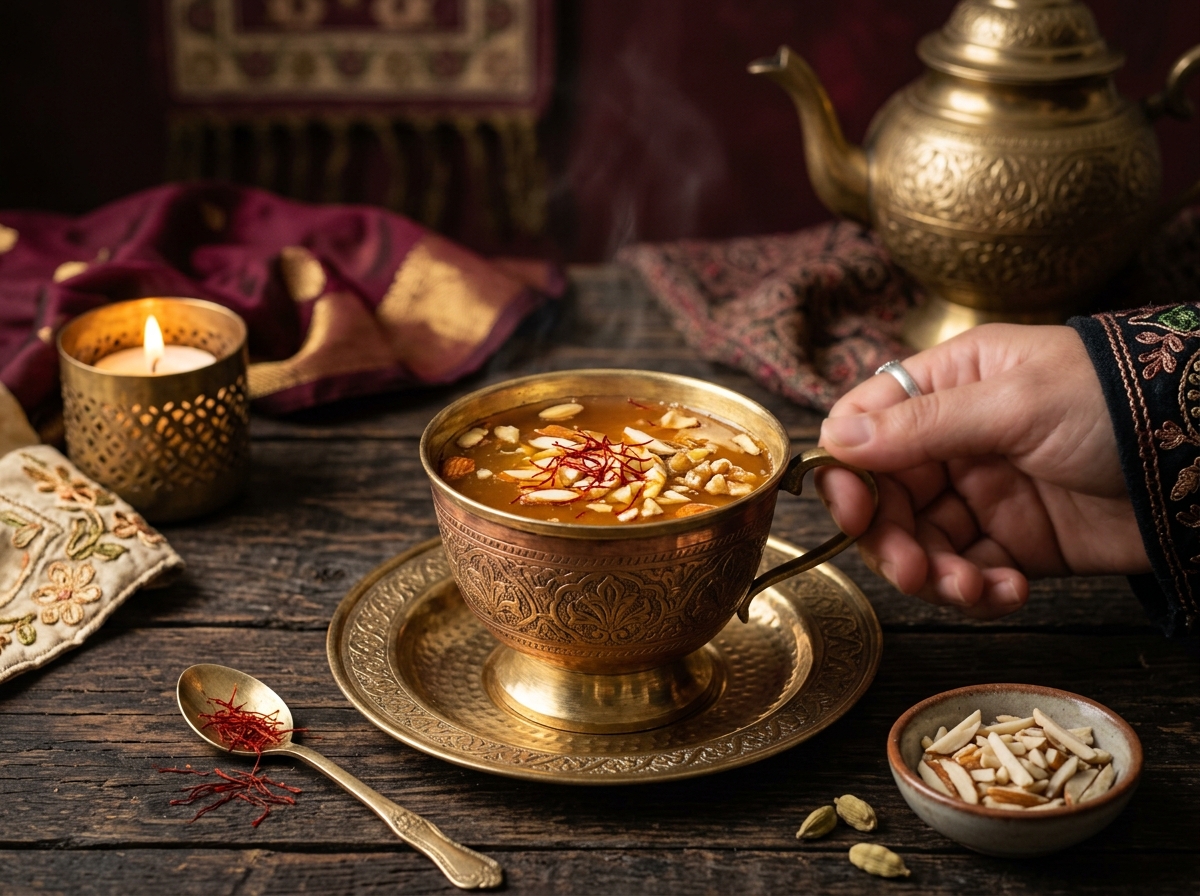
High up in the Kashmir valley, where winters are long and biting, kahwa isn't just a tea, it's a way of staying warm, welcoming guests, and marking every celebration from weddings to Eid. Unlike the milky masala cha found across the rest of India, kahwa is a green tea infusion, delicately flavoured with saffron, cinnamon, cardamom, and topped with crushed almonds or walnuts. It's often called one of the most elegant teas in the country, and once you understand what goes into it, it's easy to see why.
A Tea With Royal, Silk Route Roots
Kahwa's history is tied to the old Silk Route, which once carried green tea from China through Central Asia and into Kashmir, alongside saffron, an ingredient the valley itself is famous for growing. Over centuries, Kashmiri households combined the two, along with local spices, to create a drink that felt distinctly their own, warm enough for the mountain winters and fragrant enough to feel celebratory. It became a fixture of Kashmiri hospitality, traditionally brewed in an ornate, long-spouted copper kettle called a "samovar" and served in small cups without handles known as "kashkul".
Ingredients You'll Need
- 2 cups water
- 1.5 tablespoons green tea leaves (Kashmiri green tea if available)
- 2-3 strands of saffron
- 1 cinnamon stick
- 2 green cardamom pods, crushed
- 4-5 almonds, crushed or slivered
- Honey or sugar, to taste
Step-by-Step Recipe
Bring the water to a boil with the cinnamon stick and crushed cardamom, letting it simmer for 3-4 minutes so the spices infuse.
Take the pot off the heat, add the green tea leaves and saffron strands, and let it steep for 2-3 minutes. Green tea turns bitter if boiled directly, so this step matters.
Strain into small cups, sweeten with honey or sugar to taste, and top generously with crushed almonds before serving.
In Kashmir, kahwa is never rushed. It's poured slowly, sipped slowly, and always shared.
Health Benefits Of Kahwa
Because it's built on a green tea base rather than black tea and milk, kahwa carries all the antioxidant benefits of green tea, along with the added properties of its spices. Saffron is traditionally associated with mood support and may aid digestion. Cinnamon has natural anti-inflammatory qualities, and almonds add a dose of healthy fats and protein. It's a tea that's often recommended after a heavy meal to help with digestion, and its warming spices make it a favourite during Kashmir's cold winters.
Kahwa vs Masala Cha: What's The Difference?
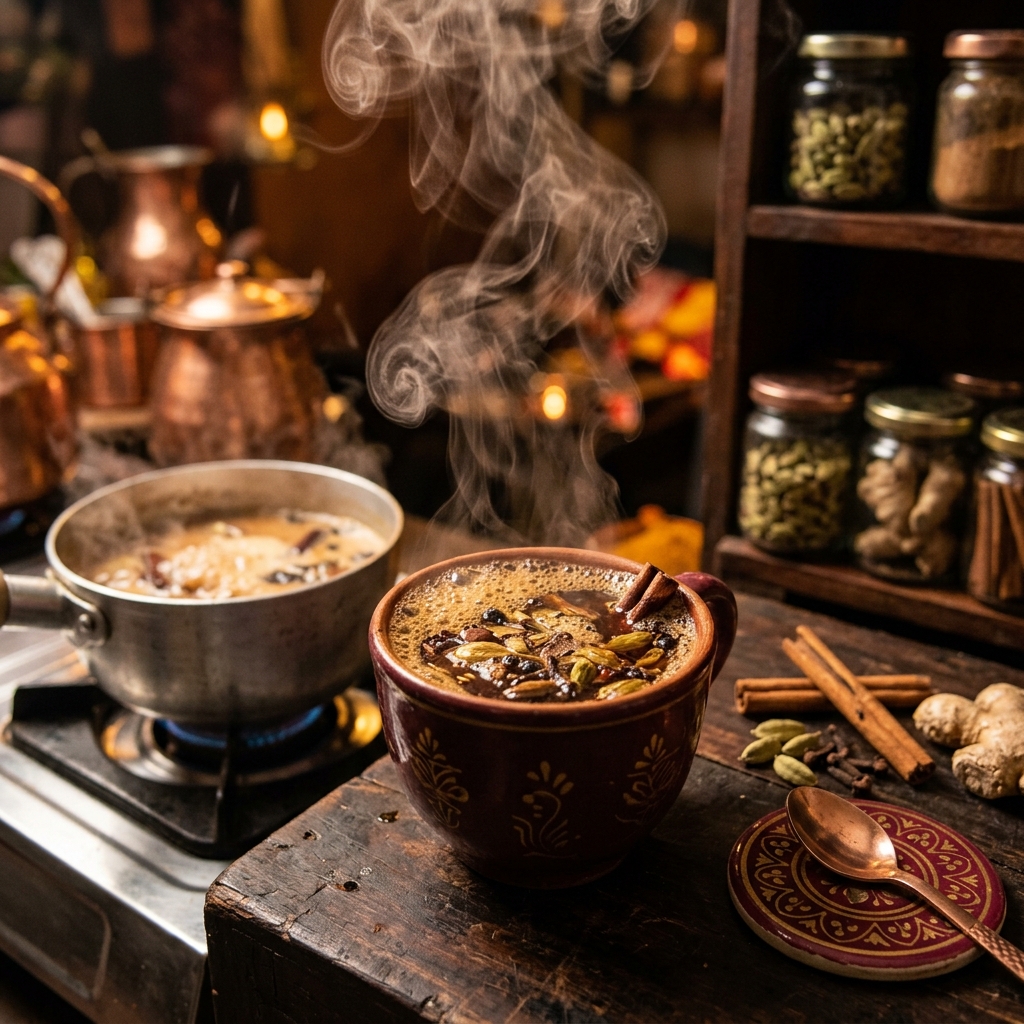
The biggest difference is the base: kahwa is built on green tea with no milk at all, while masala cha uses black tea simmered with milk. Kahwa also leans on saffron and almonds for its signature flavour, while masala cha relies on ginger and a broader mix of warming spices. Both are proudly Indian, but they represent two very different regional tea traditions, one from the Kashmir valley, and one that spread from Assam across the rest of the country.
When It's Served
Kahwa is a fixture at Kashmiri weddings, during Eid celebrations, and simply whenever guests arrive at home, often alongside traditional bread like "girda" or "tsochvoru". Winter is when it's consumed most, but many Kashmiri households keep it on hand year-round as an everyday elegant tea.
The Samovar: More Than Just A Kettle
Traditional kahwa is brewed in a samovar, an ornate copper vessel with a central compartment for hot coals that keeps water simmering for hours without needing to be reheated on a stove. Tea leaves and spices are added directly to the surrounding water chamber, and cups are refilled straight from the samovar's spout throughout a gathering. Owning a well-maintained samovar is considered a point of pride in many Kashmiri households, often passed down as a family heirloom.
Regional Variations Of Kahwa
- Some households add a pinch of dried rose petals for extra fragrance
- A few regions include a small piece of liquorice root for subtle sweetness
- Kahwa served at weddings is often more heavily spiced than the everyday version
- Walnuts are sometimes used instead of almonds as a garnish
Frequently Asked Questions
Is kahwa caffeinated?
Yes, since it's made with green tea, kahwa does contain caffeine, though generally less than a strong cup of black tea or coffee.
Can I make kahwa without saffron?
Yes, though saffron is what gives kahwa its signature colour and aroma. Without it, the tea will still taste good but will lack that distinctive golden hue and floral note.
Is kahwa the same as Kashmiri chai (pink tea)?
No, these are two different Kashmiri teas. Kahwa is a clear, green-tea based brew with saffron and spices, while Kashmiri "noon chai" or pink tea is a completely different, salty, pink-coloured tea made with a special tea leaf and baking soda that reacts with the tea to create its distinctive colour.